
Expert Comment
Philippines: Drug war killings continue in the Philippines as former president Rodrigo Duterte faces ICC warrant over anti-drugs crackdown — Expert Comment
Nationwide protests in the Philippines follow ICC's arrest of Duterte, affecting upcoming elections.

In the weeks that followed the International Criminal Court (ICC) arrest of former President Rodrigo Duterte on 11 March, nationwide protests against and in support of him broke out in the Philippines. ACLED data show nearly 60 pro-Duterte and eight anti-Duterte rallies in the Philippines in March. The largest protest took place in Davao City, Duterte’s stronghold, where supporters condemned Philippine President Ferdinand “Bongbong” Marcos Jr. for allowing the arrest.1 In contrast, the demonstrations in support of the ICC’s actions were led by the families of drug victims. Meanwhile, Filipinos living overseas gathered in The Hague to support Duterte and ask for his repatriation.
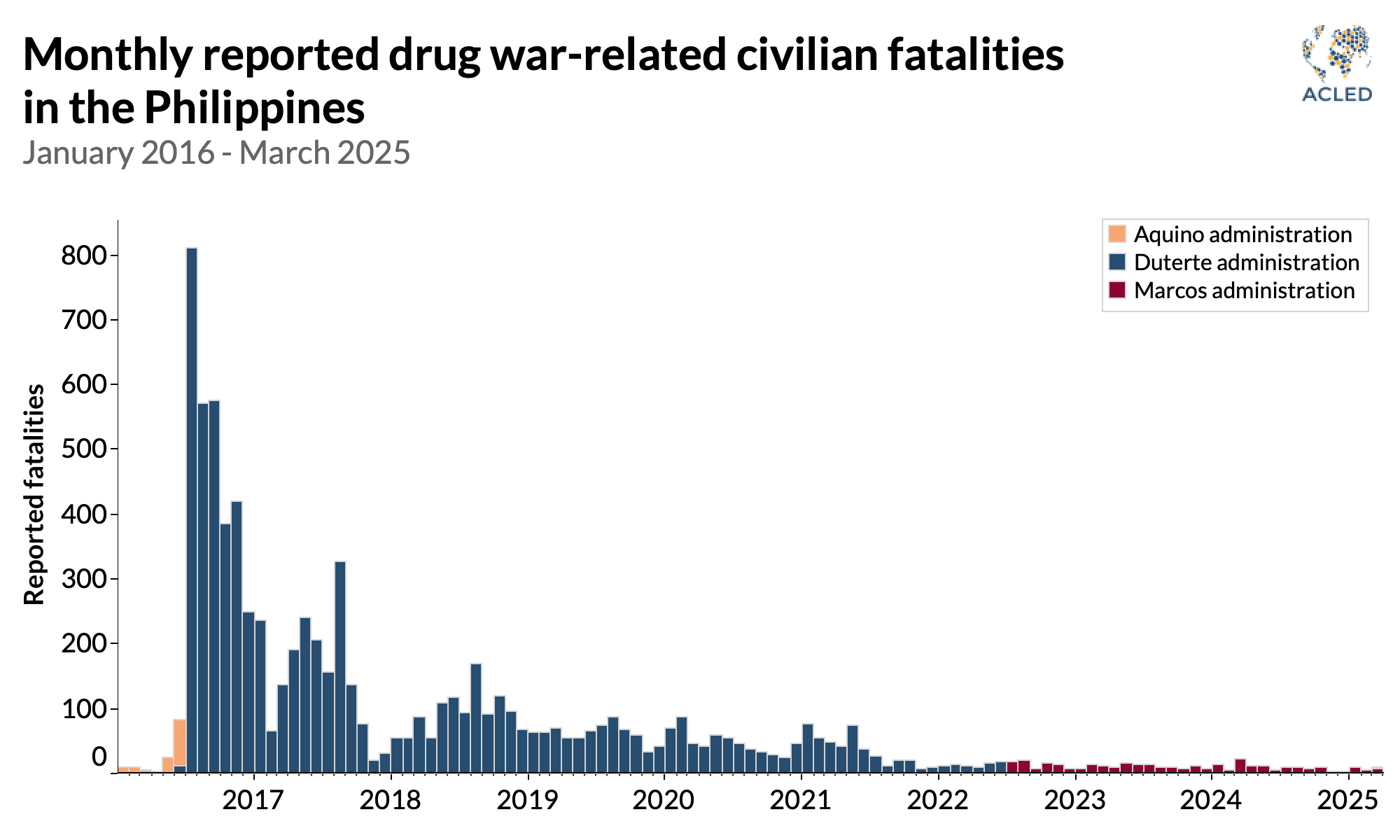
“The ICC arrest happened amid the backdrop of intense political wrangling between the Duterte and Marcos families, and it is now likely to be the defining issue of the 2025 midterm elections in the Philippines this May,” Laura Sorica, ACLED East Asia Research Manager, said. “There is no question that thousands died during the Duterte-era war on drugs, which reached a peak early on in Duterte’s term and had already caught the ICC’s attention back then. However, under the current Marcos administration, the war on drugs has continued to produce casualties, albeit at a much lower rate, with ACLED data recording 326 drug war-related civilian fatalities since Marcos Jr. took office.”
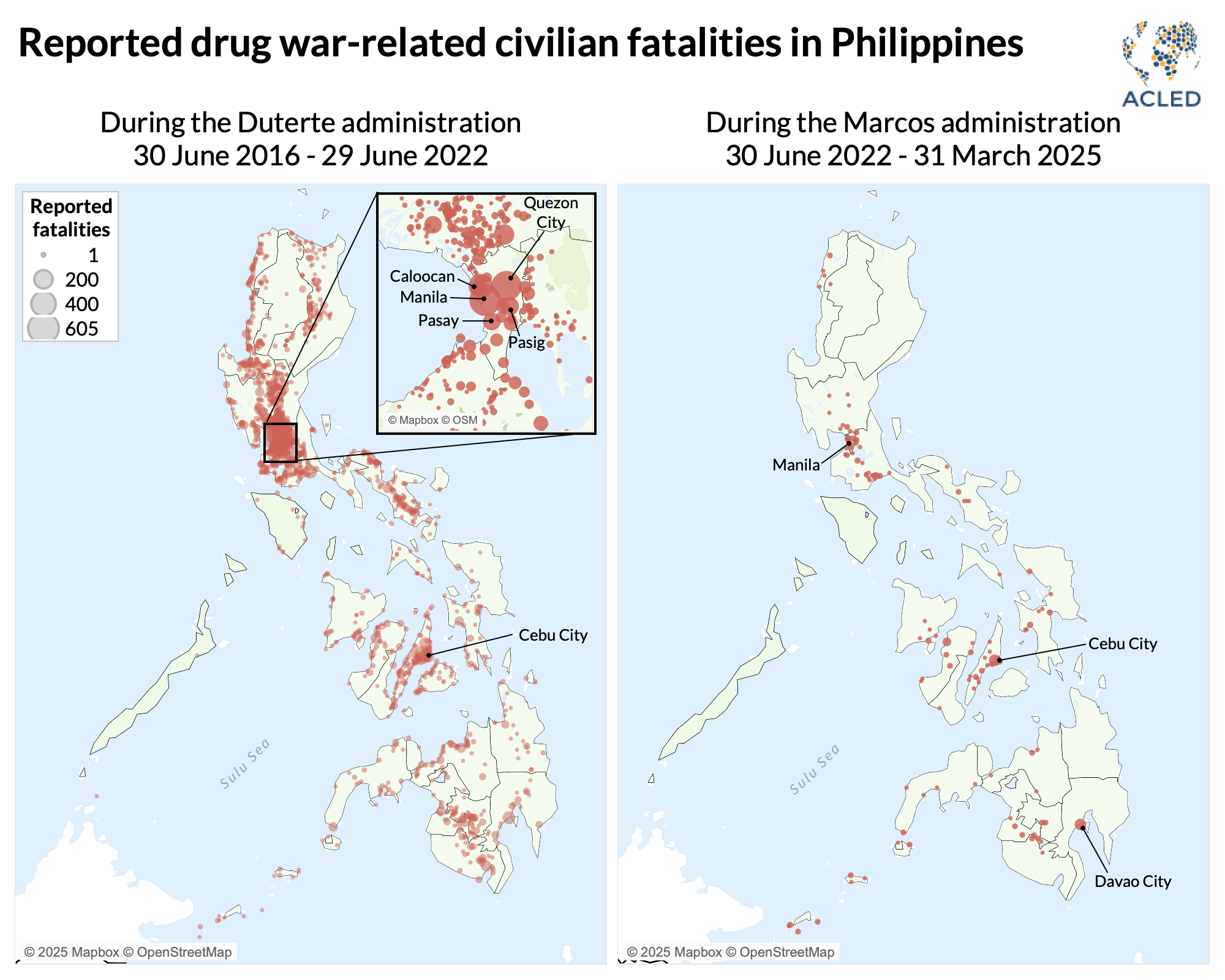
The numbers of drug war-related deaths have been heavily contested over the years. The final official police count published under the Duterte administration acknowledged 6,252 deaths between 1 July 2016 to 31 May 2022.2 Human rights groups cited by the ICC estimate closer to 30,000 deaths.3 ACLED’s count, based on reports from over 30 sources, is conservative, deferring to the lowest estimate when fatalities are unclear. The latest ACLED data records a total of 7,843 drug-war-related civilian deaths from 1 January 2016 to 29 June 2022. ACLED’s definition of “civilian” is narrow, excluding armed drug suspects from its tally, even if such actors might meet the legal definition of civilian.
For the complexities of counting the fatalities of Duterte’s drug war, see this previous ACLED report.
For more on ACLED methodology on capturing drug-related violence, see Philippines Drug War Coding decisions on drug-related violence.
ACLED (Armed Conflict Location & Event Data) is an independent, impartial, international non-profit organization collecting data on violent conflict and protest in all countries and territories in the world.
Related content


